
About the author: Mio is a Japanese high school student hoping to introduce Japanese traditions, seasonal events, and food culture to students around the world.
Every year, many schools in Japan hold a large event called a school festival, or bunkasai. Students prepare different activities, performances, decorations, and food stalls for visitors.
This year, my school festival was held on October 10 and 11, and about 11,000 people visited during the two days. It was one of the biggest school events of the year.
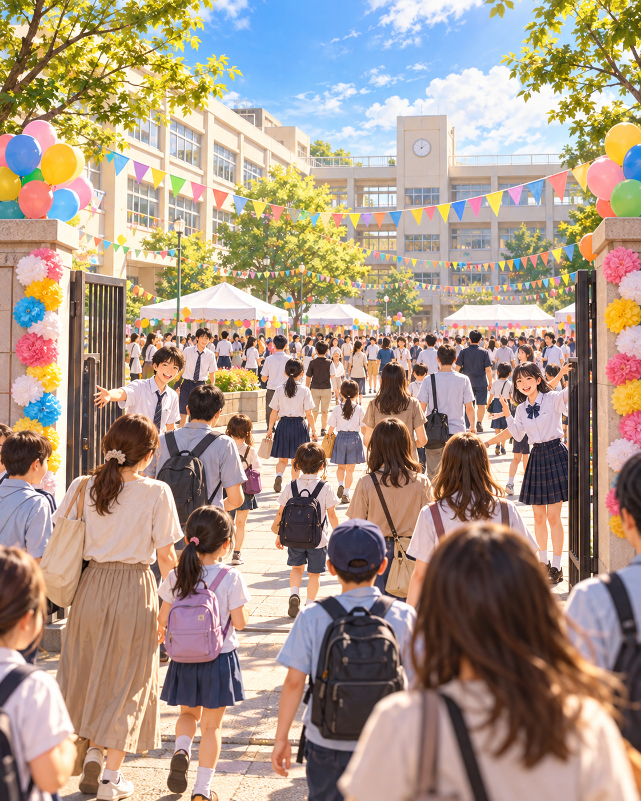
AI-Generated: A school festival welcoming many students, families, and visitors.
One special feature of Japanese school festivals is that students are deeply involved in planning and running the event. I am a member of the school festival committee, and our preparation started around spring. Knowledge and experience from previous years are passed down to the next group of students, while teachers support us with safety rules and other important matters.
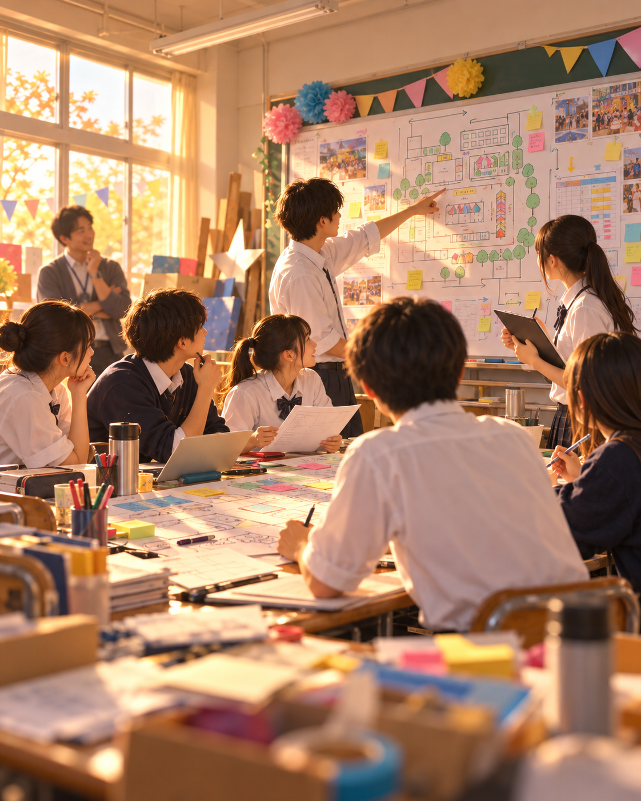
AI-Generated: Students work together to plan the school festival months in advance.
During the festival, I was responsible for guiding visitors around one of the activity areas. Both days were very long. We gathered at school at around 7:00 a.m., and because we also had work to do after the festival ended, I did not get home until around 9:30 p.m.
One of the most impressive parts of the festival is the way classrooms are transformed. Students use large amounts of cardboard, colored paper, tape, paint, and many other materials. Because we have to think about our budget, we buy many supplies from inexpensive variety stores, including 100-yen shops, as well as other stores.
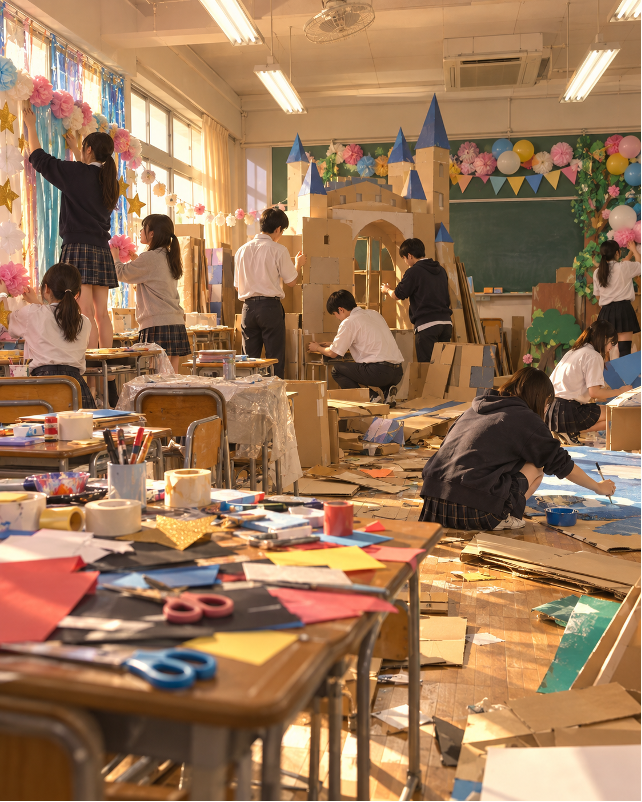
AI-Generated: Students use cardboard, colored paper, tape, and other materials to create handmade decorations.
Students decorate not only the walls, but also the ceilings and entrances with handmade props. By the time the festival begins, an ordinary classroom can look completely different.
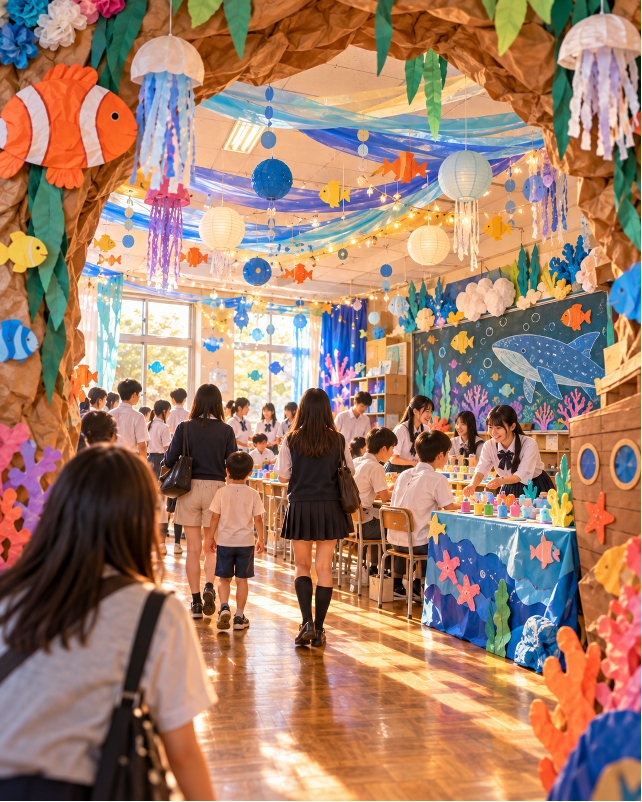
AI-Generated: An ordinary classroom can become a completely different space during the school festival.
There are many kinds of class activities. Some classes create cafés or mini-games, while others prepare plays, escape-room-style activities, or research presentations.
School clubs also take part in the festival. Visitors can watch performances or experience activities such as tea ceremony, Japanese archery, competitive karuta, and quiz events. Food stalls sell popular festival foods such as yakisoba, shaved ice, and popcorn.
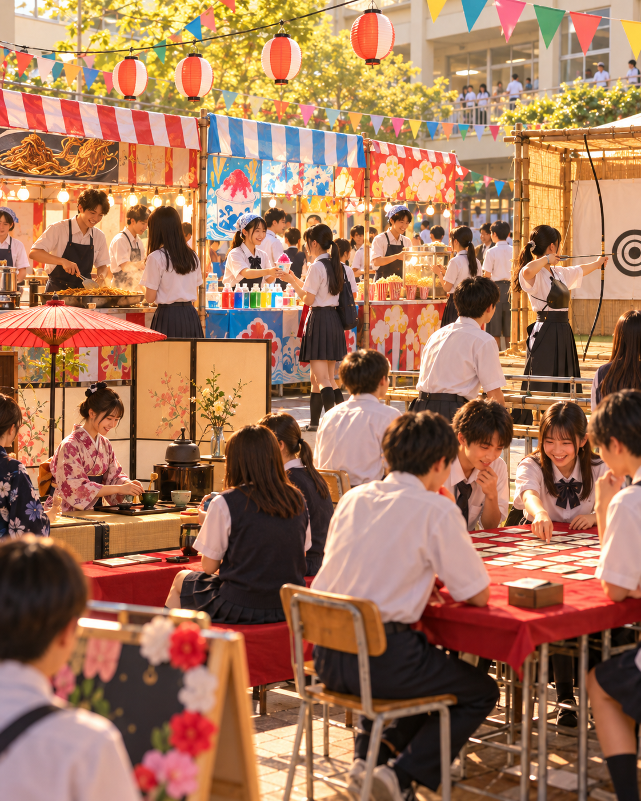
AI-Generated: Visitors can enjoy club activities, traditional experiences, and popular festival foods.
Another interesting part of our festival is cooperation with local businesses and shops. Some groups work with local companies on special products or projects. I belong to a cooking club, and this year we worked with a local confectionery shop to create an original type of arare, a Japanese rice snack. We sold it during the festival as part of our project.
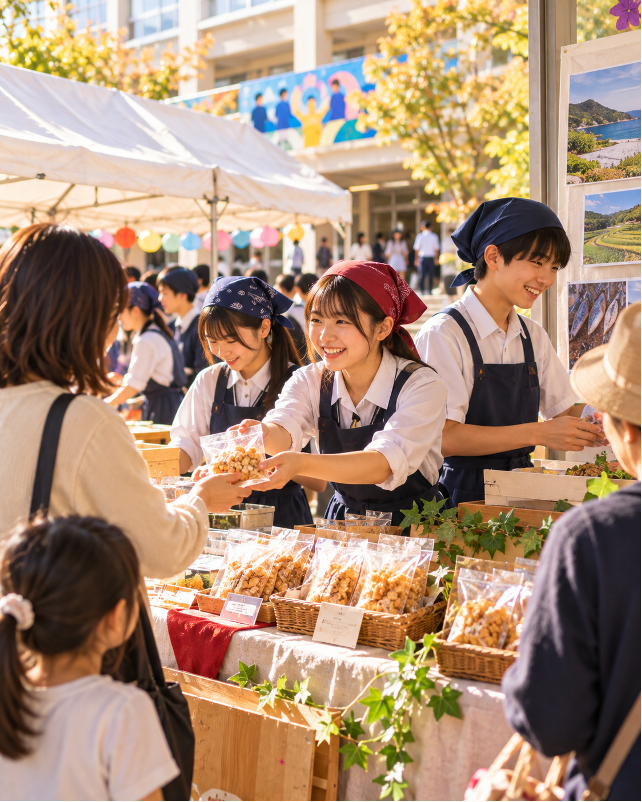
AI-Generated: Students can work with local businesses to create and sell special products during the festival.
Although some Japanese school festivals are open to the public, visitors may need to register in advance or check in at the entrance depending on the school. This helps schools manage the large number of visitors safely.
Taking part in the festival committee made me realize that a school festival is not created only during the two days when visitors come. It is the result of months of preparation and cooperation among many students, teachers, clubs, and people in the local community.
Next year will be especially meaningful because our school festival will celebrate its 50th anniversary. I will also be a second-year high school student, which is one of the main grades responsible for the festival. I am excited to use what I learned this year and become even more involved next time.
All images in this article were generated with AI for illustrative purposes.